| | | | Road Test: 2008 Benelli TNT 899 & 899 S launch – Ferocious new TNT 899 from Benelli | Written: 29/05/2008 : 09:52. Read 7881 times (59/day). | Since 2004 Benelli have been run at a loss of several million Euros. With the TNT 899, Benelli hopes to break it even in 2008. The TNT 899 is a dream naked and during our test a sweet dream. Going up the box, the new 899 is ferocious!
    32 votes | |
| |
 Text: Tor Sagen/Photography: Alberto Cervetti
Benelli have restarted their model programme several times during the last 15 or so years. Most of us remember the current day Benelli for their Tornado 900 superbike and the TNT 1130. After changing owners from Italian to Chinese hands in 2005, some fresh capital has paved the way for several fresh new models and engines.
The 1130 triple engine was based on the old 900. The new 899 is based on the new 1130… To achieve this Benelli have developed several new internals for the engine such as new cylinder heads, crankshaft, conrods and pistons. But the cylinder walls stay the same as on the 1130.  For those and other reasons, that should make the new Benelli 899 one of the most reliable Benelli motorcycles in the line-up. Less stroke makes for a more rev-happy engine and the Benelli 899 sounds ferocious going up the six-speed gear box.
Benelli have made some key changes to make the new 899 more affordable than the more exclusive TNT 1130. A new windshield is of a less complicated design and therefore cheaper to manufacture. The simpler instrument panel is now housed in a cheaper to make plastic panel. It is all mounted on a sub frame of steel rather than aluminium casting.  This has reduced the amount of components and cost. The handlebars on the 899 are of steel rather than aluminium, but this is a move to reduce vibration rather than to save cost.
Then you have the differences between the standard TNT 899 and the 899 S. First Benelli have used a different 43mm fork on the S that is fully adjustable. Then Benelli have used a two part seat on the S and a standard one-piece seat on the 899.  To distinguish the two models Benelli only offers the 899 in black and the 899 S in orange paint. The 899 S gets a carbon fibre front mudguard and a stylish side panel also in carbon fibre. The difference in price is 500 euro.
The claimed dry weight for both is 199 kilos, but we suspect the 43mm front fork on the 899 S is slightly lighter than the 50mm on the standard 899.
Both versions have an 899cc triple that produces a claimed 120 horsepower @ 9.500rpm and 88Nm @ 8.000rpm. There is a longer wait for the horsepower to kick in on the 899 compared to the 1130.  This and the fact that the 899 produces less torque make it less intimidating for new riders. This is exactly what Benelli wanted as it needs more riders to enter the brand. Soon we will also see the 750 2ue with a twin engine positioning itself as the definitive entry level model.
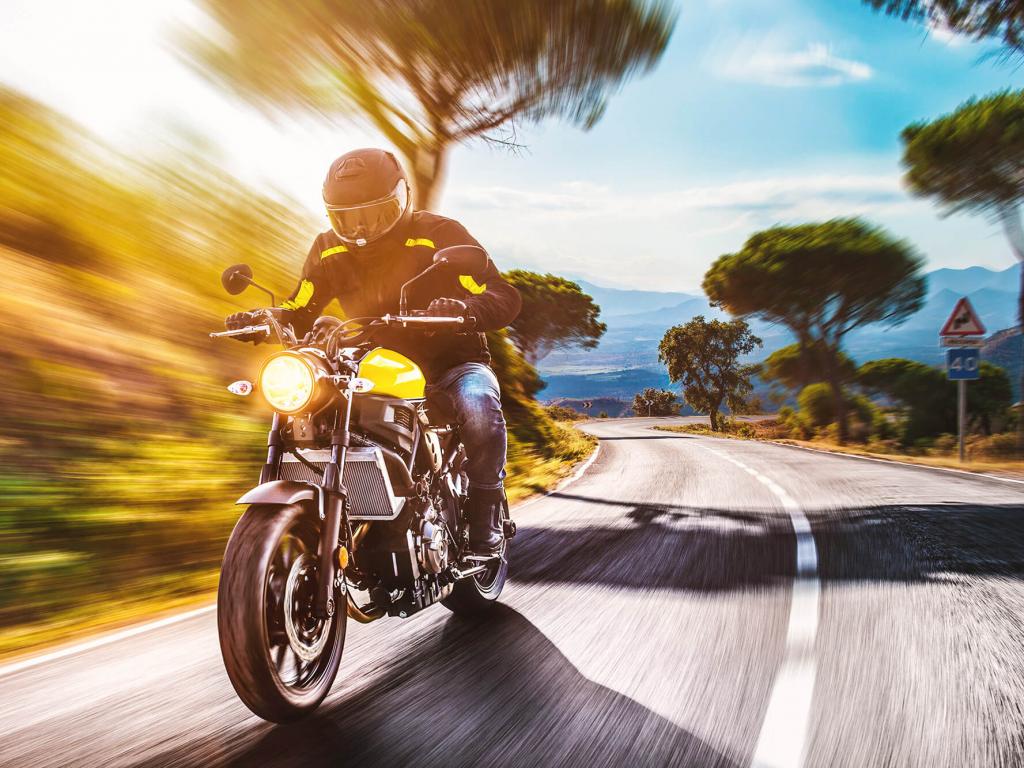
Right now the Tornado Naked Tre 899 is the entry model and we rode it on some great roads around Pesaro on Italy’s Adriatic coast. The 899 creates a lot of very nice sound even before much happens.  Back home in the UK I am riding the new Triumph Speed Triple, which is much more civilised in the acoustic expression at least. I grab the keys for the standard 899 first and follow the Benelli test rider into the mountains. First we filter past all the traffic that we meet before the roads free up into sweeping third gear corners. Quickly after that it’s all hair bend mountain roads. Here I find out that even though the spec sheet shows that there is less torque available than on the 1130, there’s still enough for good drive even in a gear higher than the optimum.  We are talking about a 900cc triple and not a 600 inline four I have to remind myself. So the 899 is no slug and the aggressive tone of the triple accompanies every impression along the way.
The tubular steel trellis frame feels very stiff through the corners. The further I lean it the easier it leans up to a point where it almost falls into the corner by itself. This is great, but there is a lack of feel somewhere. I can’t quite judge what the Dunlop D208RR’s are up to all the time.  They are not my favourite tyres anyway and I witnessed myself that all the production bikes have Dunlop Qualifiers’ mounted rather than the old D208RR’s. A couple of places I had to be careful not to run wide and it took convincing for me to trust the tyres on the semi-dusty Italian mountain roads. The four pot Brembo brakes works well as they always did and they are a safe option, but not as bling as the radial brakes we have gotten used to by now.
After lunch I swap the black 899 for the orange TNT 899 S. First I notice the difference in the seat as it’s a sportier one from the bigger TNT models on the S. It somehow gives better grip and feel moving around when riding in a more active manner.  The front feels better on the brakes too and on the S the suspension is fully adjustable. These are the real differences as the rest is all about styling. For the extra 500 euro you do actually get more than just a cool orange bike with carbon fibre details. The suspension and seat gives the S more of an edge and it’s worth it if you consider an 899 in the first place.
Wheelies come easy on the 899 in first gear. Second gear is not so easy.  When starting to abuse the Benelli TNT 899 in such a way is when I start doubting its durability. I don’t trust the clutch 100% and during my test the rev counter didn’t always work correctly. Several times I watched the rev counter show around 7.000rpm whilst the rev limiter kicked in at 10.500rpm. There is some sort of fundamental problem somewhere between the engine and the electronics. Whether the TNT 899 components are well designed enough remains to see.  The 899 worked perfectly throughout the day apart from the rev counter, but there are still issues somewhere that would bug me as an owner. Perhaps Benelli needs a complete redesign of the fundamental architecture of the Tre engines. The walls are running thin in the 1130 and that model is at the end of its development as it can’t be bored or stroked out any further. Both the 899 and the 1130 are very exciting machines when they are running at optimum performance.
Conclusion: The Benelli TNT 899 S runs through the corners like a dream and is great fun. It creates some emotions in a motorcyclist’s heart that a Honda Hornet can’t.  The best bike is the Hornet, but that’s because it’s 100% reliable. Hence, the TNT 899 can’t be recommended to someone that plans to use it as the only bike for commuting, town riding or short trips. I wouldn’t buy a TNT 899 for my 10.000km’s a year bike, that’s for sure. It’s still very much a bike number two sort of thing. The TNT 899 S is a Sunday café racer or the occasional track day bike. For that purpose it’s special enough, reliable enough and above all fun enough. A bit unstable like TNT, but the character is dynamite.
+ Character and styling Handling Good performance figures
- Reliability Rev counter not calibrated? Not the everyday fun and games motorcycle as it should be
TORNADO NAKED TRE 899 / TORNADO NAKED TRE 899 S ENGINE TYPE In line 3 cylinders, 4-stroke, liquid cooled , 4 valves per cylinder double overhead camshaft, with balancer shaft DISPLACEMENT: 899 cc BORE x STROKE: 88 x 49,2 mm COMPRESSION RATIO: 12,5:1 RATED OUTPUT: 88 kW (119,6 cv) @ 9500 rpm MAX. TORQUE: 88 Nm (8,8 kgm) @ 8000 rpm FUEL SUPPLY: Electronic injection with three throttle bodies ø53 mm EXHAUST SYSTEM With catalytic converter and oxigen sensor CERTIFICATION Euro 3
CLUTCH: Wet clutch GEARBOX: 6 speed FINAL DRIVE: Chain drive, ratio 16:41
CHASSIS FRAME Modular, tubular steel trellis frame, rear aluminium alloy casting
FRONT SUSPENSION: Tornado Naked Tre 899S: Ø43 mm upside-down fork, with hydraulic rebhound / compression and spring preload adjustments Tornado Naked Tre 899: Ø50 mm upside-down fork FRONT SUSPENSION STROKE: 120 mm
REAR SUSPENSION tubular steel trellis swingarm, progressive rear damper with hydraulic rebhound and spring preload adjustments REAR SUSPENSION STROKE: 120 mm
FRONT BRAKE Twin floating disk ø320 mm with 4 piston calipers REAR BRAKE Single disk ø240 mm with double piston caliper FRONT RIM: 17”x3.50” DOT-D REAR RIM: 17”x6.00” DOT-D
FRONT TYRE: 120/70-ZR17 58W (-120/65-ZR17 56W-) REAR TYRE : 190/50-ZR17 73W (180/55-ZR17 73W - 200/50-ZR17 75W- 190/55 ZR17 75W)
DIMENSIONS LENGHT: 2128 mm WIDHT EXCLUDING MIRRORS: 790 mm HEIGHT EXCLUDING MIRRORS: 1050 mm SEAT HEIGHT: 820 mm WHEELBASE: 1443 mm
DRY WEIGHT: 199 kg ROAD READY WEIGHT: 206 kg ADMITTED TOTAL WEIGHT: 400 kg
FUEL TANK CAPACITY 16 lt
| |
|
| |